
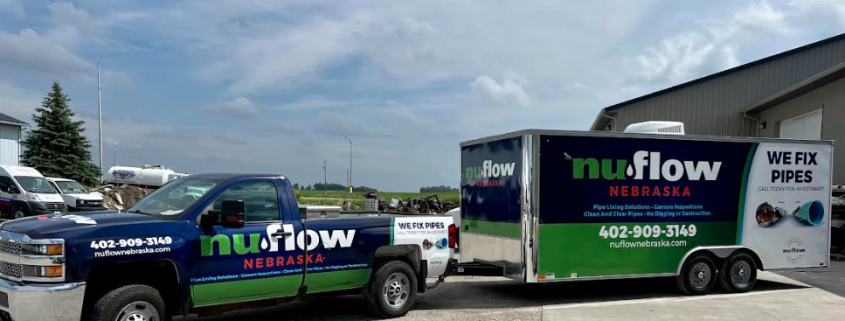
Looking for industrial pipe camera inspection in Nebraska? Nuflow Nebraska provides professional sewer camera inspection for manufacturing plants, food processing facilities, warehouses, and industrial operations across Omaha, Fremont, Council Bluffs, Nebraska City, and 50+ communities. Same-day service available. Call 402-909-3149.
Why Manufacturing Facilities Need Professional Camera Inspection
If you manage a food processing plant in Fremont, run a manufacturing operation in Council Bluffs, or oversee warehouse facilities in Omaha, you already know: downtime costs money. Every hour your production stops, revenue disappears.
That’s why smart facility managers don’t guess about pipe problems anymore. They look first with professional camera inspection.
Here’s the reality: Most industrial pipe failures happen without warning. One day everything flows fine. The next day, you’re dealing with sewage backup on the production floor, health inspectors are concerned, and your team is scrambling to find the problem.
Camera inspection changes that equation entirely. You see problems developing before they shut you down. You plan repairs during scheduled maintenance instead of emergency shutdowns. You budget accurately instead of scrambling for emergency funding.
The bottom line? Camera inspection isn’t an expense—it’s insurance against catastrophic failures that cost 10x more to fix under emergency conditions.
What Is Industrial Pipe Camera Inspection?
Professional pipe camera inspection uses high-definition waterproof cameras mounted on flexible cables to travel through your entire pipe system. As the camera moves through your Omaha facility’s drain lines or Fremont plant’s process pipes, it transmits real-time video showing exactly what’s happening inside pipes you can’t otherwise see.
Modern industrial camera systems include:
- 4K ultra-high-definition video quality
- Pan-and-tilt capabilities for complete views
- LED lighting systems for maximum visibility
- Distance markers showing exact problem locations
- GPS tracking for large facility documentation
- Digital recording for compliance and planning
You don’t just get a verbal report. You see your pipes with your own eyes, watching the live feed alongside our technician who explains exactly what you’re looking at.
Cities & Facilities We Serve
Omaha Industrial Camera Inspection
Old Market & Historic Industrial District: Buildings dating to the 1880s-1920s often have original clay or cast iron sewer lines that have served well for decades but now show their age. Camera inspection reveals condition before problems interrupt your restaurant, brewery, or business operations.
South Omaha Industrial Corridor: Manufacturing facilities and warehouses in South Omaha’s established industrial areas need camera inspection to assess aging infrastructure and plan modernization without guessing.
North Omaha Manufacturing: Food processing, light manufacturing, and distribution centers benefit from camera inspection that identifies developing issues before production disruptions occur.
Why Omaha Facilities Choose Camera Inspection:
- See exact pipe condition in historic buildings
- Plan repairs around production schedules
- Document infrastructure for insurance and compliance
- Prevent unexpected shutdowns
Fremont Manufacturing & Processing
Hormel Foods & Food Processing District: Food processing operations require FDA compliance and can’t afford unexpected sewer failures. Camera inspection identifies grease buildup, structural issues, and potential code violations before health inspectors find them.
Downtown Historic Industrial: Fremont’s established manufacturing district features buildings from the early 1900s. Camera inspection shows you what century-old pipes look like inside and what needs addressing.
Agricultural Processing Facilities: Seasonal processing creates intense demands on pipe systems. Camera inspection during off-season reveals damage from peak usage, allowing repairs before next season begins.
Fremont Facility Benefits:
- FDA compliance documentation
- Preventative maintenance planning
- Seasonal repair scheduling
- Avoid peak-season failures
Council Bluffs Industrial Operations
Historic Railroad District: Buildings constructed during Council Bluffs’ railroad boom feature aging pipe infrastructure. Camera inspection reveals condition without excavating historic properties.
Manufacturing Corridor: Light manufacturing and industrial operations need camera inspection to assess pipe capacity and identify problems before they impact production.
Cross-River Omaha-Council Bluffs Facilities: Many companies operate facilities on both sides of the Missouri River. We provide consistent camera inspection services throughout the metro area.
Council Bluffs Advantages:
- Historic building expertise
- Cross-state service capability
- Manufacturing facility experience
- Weekend inspection availability
Nebraska City Historic & Manufacturing
Arbor Day Farm Area: Food processing and tourism-related businesses benefit from camera inspection preventing visitor-impacting failures.
Historic Downtown: Buildings dating to Nebraska City’s steamboat era need camera inspection to assess original pipe systems without disturbing historic structures.
Manufacturing & Processing: Industrial operations in Nebraska City’s established areas use camera inspection for preventative maintenance and compliance documentation.
Blair Food Processing & Manufacturing
ConAgra & Food Processing Facilities: Large-scale food processing requires camera inspection documentation for USDA compliance and preventative maintenance planning.
Downtown Industrial: Blair’s established industrial areas benefit from camera inspection revealing infrastructure condition in buildings from the mid-20th century.
Agricultural Support Facilities: Grain storage, equipment repair, and agricultural support operations need camera inspection to maintain operational readiness.
Additional Service Areas:
Plattsmouth: Historic downtown businesses and older residential properties benefit from camera inspection before undertaking repairs.
Valley: Established community with aging infrastructure. Camera inspection identifies problems in original pipe systems.
Springfield: Older residential and small commercial properties. Camera inspection provides clarity before expensive repair decisions.
Ashland: Historic town center and established properties. Camera inspection documents condition for planning and budgeting.
Gretna Industrial Park: Growing manufacturing facilities. Camera inspection establishes baseline for new operations and assesses existing infrastructure.
Industrial Camera Inspection Process
How We Inspect Manufacturing Facilities
Step 1: Pre-Inspection Consultation (15-30 minutes)
We discuss your specific concerns, review facility layout, and plan inspection timing around your production schedule. For food processing in Fremont or manufacturing in Council Bluffs, we coordinate inspections during shutdowns, weekends, or maintenance windows.
Step 2: Access Point Identification (30-60 minutes)
Large facilities often have multiple access points. We identify optimal entry points for complete system coverage, minimizing disruption to operations.
Step 3: Complete System Inspection (2-6 hours depending on facility size)
The camera travels through your entire pipe system while you watch the live feed. We note:
- Pipe material, diameter, and condition
- Grease buildup (food processing)
- Root intrusions (outdoor lines)
- Corrosion levels (older facilities)
- Structural integrity
- Flow capacity
- Code compliance issues
Step 4: Digital Documentation (30-60 minutes)
You receive comprehensive documentation including:
- Complete video recording
- Written assessment report
- Problem area photos with measurements
- Compliance documentation (if needed)
- Repair recommendations prioritized by urgency
- Cost estimates for recommended solutions
Step 5: Follow-Up Planning (As needed)
We discuss findings, answer questions, and help you plan repairs around production schedules and budget cycles.
What Camera Inspection Reveals in Industrial Settings
Grease Accumulation (Food Processing)
The Problem: Food processing facilities in Fremont, restaurant operations in Omaha’s Old Market, and commercial kitchens throughout the region deal with grease that coats pipe interiors, gradually reducing flow capacity.
What Camera Shows: Exact grease buildup thickness, whether professional cleaning will resolve it, or if pipe relining provides a permanent solution preventing future accumulation.
Why It Matters: Health inspectors notice grease problems during audits. Camera inspection documentation shows you’re addressing issues proactively, not reactively.
Structural Deterioration (Historic Buildings)
The Problem: Buildings constructed in the early 1900s across Omaha, Council Bluffs, and Nebraska City have original cast iron or clay pipes now reaching end-of-life.
What Camera Shows: Interior corrosion levels, remaining pipe wall thickness, joint separation, and whether pipes can be rehabilitated or require replacement.
Why It Matters: Historic buildings can’t always accommodate modern excavation. Camera inspection determines if trenchless solutions work for your situation.
Root Intrusions (Outdoor Lines)
The Problem: Mature trees near facilities send roots seeking moisture. Pipe joints offer entry points, eventually causing blockages and structural damage.
What Camera Shows: Exact locations where roots entered, extent of root mass inside pipes, and whether roots damaged pipe structure beyond just blocking flow.
Why It Matters: Root removal without addressing entry points means roots return. Camera inspection guides permanent solutions.
Capacity Issues (High-Volume Operations)
The Problem: Manufacturing facilities often expand production over decades. Original pipe sizing may no longer handle current volumes.
What Camera Shows: Pipe diameter, flow restrictions, and whether capacity limitations come from sizing or blockages.
Why It Matters: Knowing whether you need larger pipes or just need to clear existing pipes prevents spending money solving the wrong problem.
Code Compliance (Regulated Industries)
The Problem: Food processing, healthcare, and other regulated industries face compliance requirements that older pipe systems may not meet.
What Camera Shows: Exact pipe condition for compliance documentation, areas not meeting current codes, and what upgrades inspectors will require.
Why It Matters: Proactive compliance is cheaper and easier than reactive compliance during audits or inspections.
Camera Inspection Pricing for Industrial Facilities
Standard Industrial Inspection
Small Facility (Under 200 feet of pipe):
- Investment: $199-$399
- Includes: Complete video, written report, basic documentation
- Timeline: 2-3 hours onsite
- Best for: Small manufacturing, single-building operations
Medium Facility (200-500 feet):
- Investment: $399-$799
- Includes: Complete video, comprehensive report, compliance documentation
- Timeline: Half-day inspection
- Best for: Food processing, multi-building facilities, warehouses
Large Facility (500+ feet):
- Investment: $799-$1,500+
- Includes: Complete video, detailed facility map, compliance documentation, multi-point inspections
- Timeline: Full-day or phased approach
- Best for: Large manufacturing complexes, campus-style facilities
Custom Industrial Projects:
- Investment: Quote based on scope
- Includes: Customized documentation, regulatory compliance reports, multi-location coordination
- Timeline: Planned around production schedules
What’s Included in Every Inspection
✓ High-definition video recording you keep ✓ Written assessment report with photos ✓ Distance-marked problem identification ✓ Repair recommendations prioritized by urgency ✓ Cost estimates for recommended solutions ✓ Compliance documentation (when applicable) ✓ Follow-up consultation included
Why Industrial Facilities Choose Camera Inspection
Real Nebraska Examples
Fremont Food Processing Plant:
A food processing facility noticed occasional slow drains but production demands prevented immediate investigation. During scheduled summer maintenance shutdown, we conducted camera inspection revealing moderate grease buildup and three root intrusions in outdoor lines.
Result: Scheduled cleaning and targeted repairs during the same shutdown. Total cost: $3,200. Alternative: Emergency shutdown during fall processing season would have cost 10x more including lost production.
Omaha Manufacturing Warehouse:
A distribution center in South Omaha experienced recurring backups in one section. Three different service calls provided temporary relief but problems returned.
Camera inspection revealed a bellied pipe section where waste accumulated. The original pipe installation had settled over 40 years, creating a low spot.
Result: Targeted CIPP repair corrected the belly without excavating the warehouse floor. Problem solved permanently for $4,800 vs $18,000 quoted for floor excavation and replacement.
Council Bluffs Historic Building:
A renovated historic building housing light manufacturing needed pipe condition documentation for insurance purposes.
Camera inspection showed century-old cast iron pipes with moderate corrosion but adequate structural integrity for continued use with monitoring.
Result: Insurance accepted documentation showing pipes were functional. Facility avoided unnecessary $25,000+ replacement by proving current condition was acceptable.
Camera Inspection for Specific Industries
Food Processing & Restaurant Operations
What We Inspect:
- Kitchen drain lines and grease traps
- Process water drainage systems
- Sanitary sewer connections
- Floor drain networks
Why It Matters: FDA and health department compliance requires documentation. Camera inspection provides visual proof of maintenance and cleanliness.
Common Findings:
- Grease accumulation requiring cleaning
- Root intrusions in outdoor connections
- Corroded pipes needing rehabilitation
- Undersized pipes for current volume
Manufacturing & Production Facilities
What We Inspect:
- Process water drainage
- Chemical waste lines (when appropriate)
- Sanitary facilities for employees
- Storm water management systems
Why It Matters: Production cannot stop for pipe failures. Camera inspection identifies problems during scheduled maintenance, not during production runs.
Common Findings:
- Deteriorated pipes in older facilities
- Capacity issues from expanded operations
- Root damage in outdoor lines
- Structural settling affecting drainage
Warehousing & Distribution
What We Inspect:
- Loading dock drainage
- Restroom facilities
- Office area plumbing
- Storm water management
Why It Matters: Distribution centers operate 24/7. Camera inspection prevents disruptions to shipping schedules and customer commitments.
Common Findings:
- Blocked floor drains
- Broken pipes under concrete slabs
- Inadequate drainage in loading areas
- Age-related deterioration
Agricultural Processing
What We Inspect:
- Seasonal processing drainage
- Sanitary systems
- Outdoor connections to municipal systems
- High-volume flush systems
Why It Matters: Seasonal operations mean repairs must happen between harvest seasons. Camera inspection during off-season enables planning.
Common Findings:
- Damage from high-volume seasonal use
- Root intrusions during dormant periods
- Pipe stress from temperature extremes
- Capacity limitations
Frequently Asked Questions
How much does industrial camera inspection cost?
Industrial camera inspection typically costs $199-$1,500 depending on facility size and complexity. Small facilities under 200 feet of pipe run $199-$399. Medium facilities cost $399-$799. Large manufacturing complexes require custom quotes. Investment includes complete video, written reports, and compliance documentation when needed.
Can you inspect pipes while we’re operating?
Yes, in most cases. We coordinate inspections around your production schedule, often inspecting during shift changes, lunch breaks, or slower periods. For food processing requiring shutdowns, we schedule during planned maintenance windows.
What if camera inspection finds problems needing immediate repair?
We provide prioritized recommendations showing what needs immediate attention versus what can wait for scheduled maintenance. Emergency issues get flagged clearly. Many problems we find can be scheduled around your operations rather than requiring emergency shutdowns.
Do you provide documentation for compliance purposes?
Yes. We provide detailed video documentation, written reports with photos, and compliance-specific reporting when needed for FDA, USDA, health departments, or insurance requirements.
How long does industrial camera inspection take?
Small facilities: 2-3 hours. Medium facilities: Half-day. Large facilities: Full day or phased approach over multiple sessions. We work with your schedule to minimize impact.
Can camera inspection reach all areas of our facility?
Professional equipment reaches 95%+ of industrial pipe systems. Rare blockages preventing camera access get cleared first, then inspection proceeds. Multiple access points in large facilities ensure complete coverage.
Will camera inspection work in older buildings?
Yes. Camera inspection is ideal for historic buildings in Omaha, Council Bluffs, Nebraska City, and other areas where excavation would damage historic structures. We assess pipe condition without invasive investigation.
Do you offer regular inspection programs?
Yes. Many facilities schedule annual or semi-annual camera inspections as part of preventative maintenance programs. We provide consistent documentation tracking pipe condition over time.
Service Coverage – 50 Mile Radius
Primary Industrial Service Areas
Metropolitan Omaha-Council Bluffs:
- Omaha industrial districts (all areas)
- South Omaha manufacturing corridor
- Council Bluffs industrial zones
- Bellevue commercial facilities
- Papillion business parks
- La Vista industrial areas
Agricultural Processing Centers:
- Fremont (Hormel and food processing)
- Blair (ConAgra and agricultural facilities)
- Nebraska City (processing and tourism)
- Valley (established commercial)
- Springfield (small manufacturing)
Historic Industrial Communities:
- Plattsmouth downtown commercial
- Ashland historic district
- Gretna industrial park
- Louisville established businesses
- Elkhorn commercial corridor
Extended Coverage: All communities within 50 miles of Bellevue including Wahoo, Weeping Water, Auburn, and surrounding areas.
Take Action: Schedule Your Industrial Camera Inspection
Why Schedule Now
Prevent Production Disruptions: Finding problems during scheduled inspections means planned repairs, not emergency shutdowns.
Budget Accurately: Know exactly what needs fixing instead of guessing at reserve fund requirements.
Comply Proactively: Documentation shows inspectors you’re maintaining facilities properly, not reacting to violations.
Extend Infrastructure Life: Early problem detection prevents minor issues from becoming catastrophic failures.
🎯 Three Ways to Schedule
1. Call Our Industrial Specialists
📞 402-909-3149
- Available 24/7 for emergencies
- Schedule around production needs
- Speak with experienced facility specialists
- Same-day service for urgent situations
2. Email Coordination
- Detailed facility information requests
- Multi-location coordination
- Compliance documentation inquiries
- Custom inspection planning
3. Online Request
🌐 www.nuflownebraska.com/industrial
- Submit facility details
- Request inspection quote
- Choose preferred timing
- Receive prompt follow-up
Industrial Camera Inspection Package
What You Receive:
✓ Complete HD video recording (yours to keep) ✓ Written assessment report with facility map ✓ Distance-marked problem identification ✓ Prioritized repair recommendations ✓ Cost estimates for all suggested work ✓ Compliance documentation (when needed) ✓ Follow-up consultation included
Investment:
- Small facilities: $199-$399
- Medium facilities: $399-$799
- Large facilities: Custom quotes
Scheduling:
- Around your production schedule
- Weekend availability
- After-hours service
- Emergency response capability
Why Manufacturing Facilities Trust Nuflow Nebraska
Industrial Expertise:
- 15+ years serving Nebraska manufacturing
- Food processing facility experience
- Historic building specialization
- Compliance documentation proficiency
Advanced Technology:
- Latest HD camera systems
- GPS tracking for large facilities
- Digital documentation platforms
- Comprehensive reporting capabilities
Flexible Service:
- Schedule around production
- Weekend and after-hours available
- Multi-location coordination
- Emergency response capability
Professional Standards:
- NASSCO-certified technicians
- Licensed and insured ($2M coverage)
- Compliance-focused documentation
- Quality guarantee on all work
Don’t Wait for Pipe Failures to Disrupt Production
Your Omaha manufacturing facility, Fremont food processing plant, Council Bluffs warehouse, or Nebraska City operation deserves the clarity that professional camera inspection provides.
See what’s happening in your pipes before problems shut you down.
Call 402-909-3149 today to schedule your industrial pipe camera inspection.
Nuflow Nebraska Professional Industrial Pipe Camera Inspection Specialists
📞 402-909-3149 🌐 www.nuflownebraska.com 📧 contact@nuflownebraska.com 📍 10219 S. 191st Ave, Omaha, NE 68136
Serving Manufacturing & Industrial Facilities: Omaha | Council Bluffs | Fremont | Blair | Nebraska City | Plattsmouth | Valley | Springfield | Ashland | Gretna | 50+ Communities
Licensed • Insured • NASSCO Certified • Industrial Facility Specialists
Professional pipe camera inspection for Nebraska’s manufacturing, food processing, warehousing, and industrial operations. Schedule around your production. Call 402-909-3149.
